
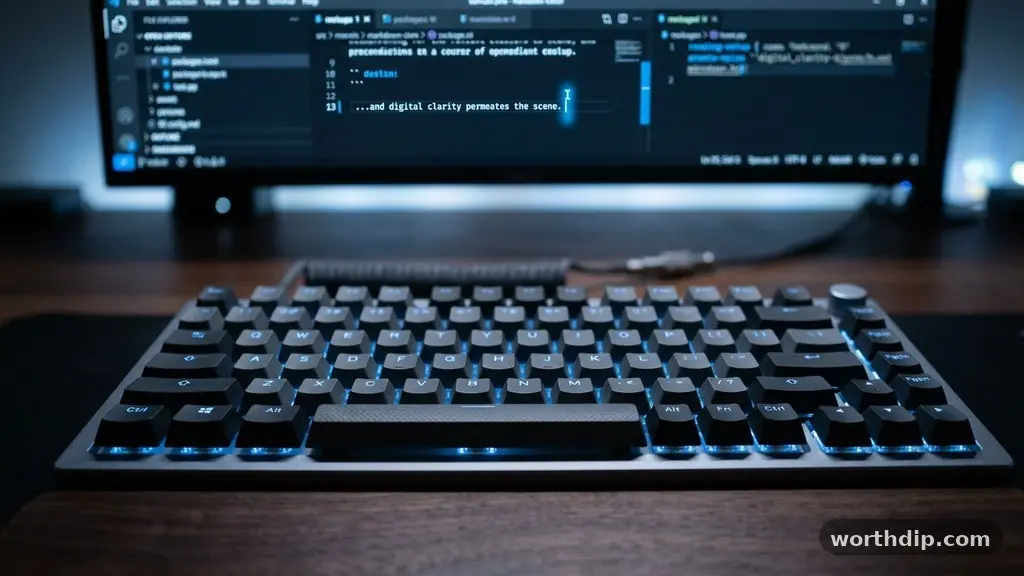
Integrating effective Writing Tools Aggr8tech into your daily workflow can transform how you approach documentation and creative content. These systems offer more than just basic spell-checking; they provide sophisticated layers of analysis that help refine your tone, clarity, and overall structure.
Whether you are drafting technical documentation or polishing a personal project, leveraging these modern digital assistants allows you to maintain consistency while reducing the time spent on manual editing. By understanding how these platforms interface with your existing software, you gain a significant advantage in producing professional-grade material that resonates with your audience.
Core Benefits of Modern Editing Software
The primary advantage of adopting advanced writing support is the immediate feedback loop it provides for your prose. Instead of waiting until a document is complete to identify errors, you receive real-time suggestions that address grammar, syntax, and stylistic choices.
This proactive approach saves hours of proofreading time and ensures that your message remains clear throughout the drafting process. Many of these tools also offer tone detection, which helps you align your writing with specific professional standards or audience expectations.
Beyond basic correction, these systems act as a secondary set of eyes for complex projects. When you are deeply involved in a technical report or a long-form article, it is easy to overlook repetitive phrasing or awkward sentence structures.
Modern software highlights these issues, allowing you to maintain a high level of quality without sacrificing your creative flow. By automating the technical side of the writing process, you are free to focus on the substance and strategy behind your words.
Integrating Tools into Your Technical Workflow
Technical writing requires a level of precision that general-purpose editors often fail to capture. When you use specialized Writing Tools Aggr8tech, you gain access to features designed for complex documentation, such as consistency checks for terminology and industry-specific style guides.
These tools ensure that your technical manuals, API documentation, and research papers follow a unified voice. Maintaining this level of professionalism is crucial for building trust with your readers and stakeholders.
Effective integration involves setting up your environment to support these features from the start of your project. Many developers and technical writers prefer tools that offer plugin support for code editors and markdown environments.
This allows you to check your text directly within the workspace where you write, eliminating the need to copy and paste into external applications. This seamless connection between your writing and your technical environment significantly improves your overall productivity.
Comparing Popular Writing Assistance Platforms
To understand the landscape, it helps to look at how different software solutions stack up against one another in terms of features and accessibility. While some platforms focus on creative storytelling, others are built specifically for business and academic environments. Choosing the right tool depends largely on the nature of your content and the platforms where you publish your work.
| Feature | Standard Editors | Advanced AI Tools | Technical Suites |
|---|---|---|---|
| Grammar Check | Basic | Advanced | High Precision |
| Tone Analysis | Limited | Extensive | Style-Focused |
| Integration | Native Apps | Browser/API | CLI/Markdown |
| Cost | Free/Low | Subscription | Enterprise |
Each category offers distinct advantages depending on your specific needs. If you are writing simple emails, a standard editor is likely sufficient. However, if you are managing complex documentation projects, you will find that the specialized features of an advanced suite provide much better value over time.
Optimizing Your Environment for Maximum Output
Your physical and digital workspace significantly influences the quality of your output. When you use Writing Tools Aggr8tech on a high-performance device like a modern Mac, you benefit from hardware-accelerated text processing and quick response times.
These machines are optimized for the types of multitasking that writers often perform, such as keeping a research browser open while drafting in a dedicated text editor. Ensuring your system is up to date allows these writing assistants to function without latency.
Customizing your keyboard shortcuts and interface settings is another way to streamline your writing process. Many writers find that mapping frequently used editing commands to specific key combinations increases their speed and reduces cognitive load.
You should also consider how your lighting and desk setup affect your focus during long sessions. A comfortable, distraction-free environment is the best partner for the software you choose to use.
Leveraging AI for Research and Drafting
Artificial intelligence has become a cornerstone of modern writing, acting as a partner in the research phase as much as the editing phase. You can use these tools to summarize long articles, extract key data points, and even brainstorm structural outlines for your next project.
By feeding your research notes into an AI-enabled writing tool, you can quickly generate a draft that organizes your thoughts into a logical flow. This is particularly useful when you have a vast amount of information but are struggling to find a starting point.
It is important to remember that these tools are intended to assist, not replace, your critical thinking. Always verify the information provided by AI, especially when citing facts or technical data for professional documentation.
Treat the output as a draft that requires your personal touch to ensure accuracy and nuance. When used responsibly, AI significantly accelerates the transition from an idea to a polished piece of content.
Key Features to Look for in Writing Software
When evaluating which tools to add to your stack, prioritize those that offer a balance of power and ease of use. You want software that provides actionable insights rather than just flagging every minor deviation from a standard rule.
Look for platforms that allow you to create custom dictionaries or style rules, as this will help your work maintain a unique voice. These features are essential for writers who work within specific branding guidelines or technical constraints.
- Real-time grammar and syntax correction
- Customizable style guides for consistent terminology
- Browser extensions for cross-platform support
- Privacy controls for sensitive document handling
- Version history to track changes over time
- Support for multiple languages or regional dialects
These features form the foundation of a robust writing environment. By selecting a tool that excels in these areas, you ensure that your investment pays off in the quality of your final output. Don’t settle for tools that force you to adapt your workflow to their limitations; look for software that adapts to your unique requirements.
Common Mistakes When Using Writing Tools
Even the most sophisticated software can become a hindrance if used incorrectly. One of the most frequent errors is over-reliance on automated suggestions, which can strip the personality and nuance from your writing.
If you blindly accept every correction, your prose may end up sounding robotic or generic. It is essential to treat every suggestion as a question: does this edit actually improve the clarity, or does it just conform to a rigid set of rules?
Another mistake is failing to configure the tool for the specific context of your writing. A tool set to “casual” will flag technical terms as errors in a manual, while a “formal” setting might be too stiff for a blog post. Take the time to adjust the settings for every major project you undertake.
This simple step prevents the software from constantly interrupting your flow with irrelevant suggestions. You can learn more about professional writing standards through the World Wide Web Consortium style guidelines to better understand how to structure your digital content.
Frequently Asked Questions
How do I know if a tool is suitable for technical writing?
Technical writing tools should support markdown, offer terminology management, and provide clear, non-intrusive feedback. They should prioritize accuracy over stylistic flair and allow for the integration of custom glossaries.
Can these tools replace a human editor?
No tool can fully replace a human editor, as they lack the ability to understand deep context, irony, or complex logical relationships. They are best used as a supplement to help with the heavy lifting of consistency and basic grammar.
Are cloud-based writing tools safe for sensitive documentation?
It depends on the provider’s privacy policy and data encryption standards. Always review the terms of service and look for options that offer local-only processing or strict enterprise-grade security for your files.
How often should I update my writing software?
You should enable automatic updates to ensure you have the latest security patches and feature improvements. Staying current also ensures compatibility with your operating system and other integrated applications.
What is the best way to get started with a new writing tool?
Start by using it for a low-stakes project to get comfortable with the interface and the types of suggestions it provides. Once you understand its strengths and weaknesses, you can integrate it into your more demanding professional work.
Refining Your Future Writing Process
The journey toward better writing is an ongoing process of refinement and adaptation. By incorporating Writing Tools Aggr8tech into your daily routine, you create a system that grows alongside your skills.
You will find that as you become more comfortable with these platforms, you spend less time worrying about the mechanics of language and more time developing your ideas. Keep experimenting with different configurations and tools to find the perfect balance for your specific workflow.
Effective writing is about communication, and these tools are simply the bridge that helps your ideas reach your audience with clarity and impact. Stay curious about new features and updates, as the landscape of digital writing assistance changes rapidly.
We encourage you to start small, integrate these tools into your next project, and see how they can change your approach to content creation. Your best work is yet to come, and the right tools will help you reach that potential.