
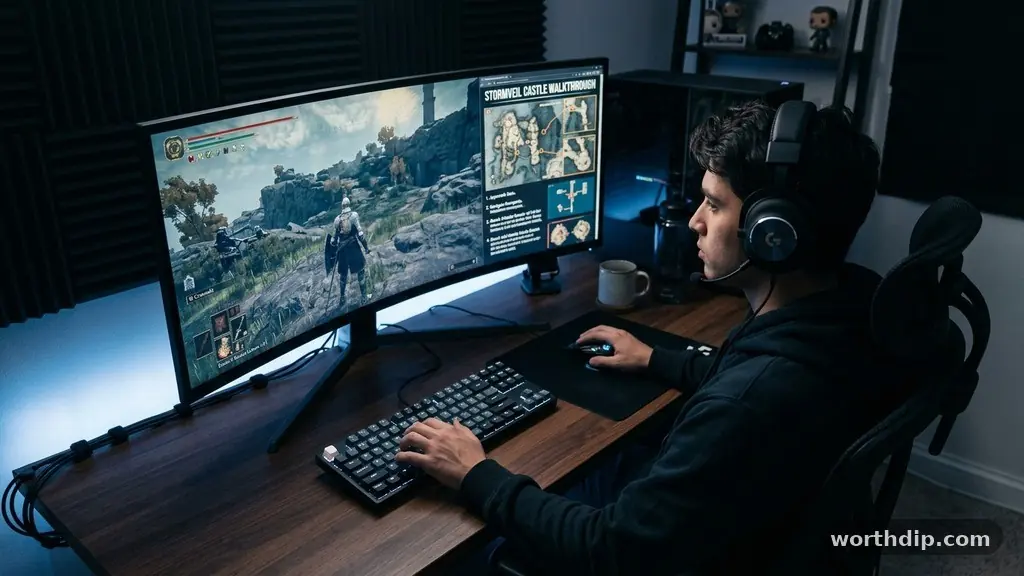
Navigating complex video games often requires a bit of extra assistance, and resources like ThinkOfGames.com provide structured support for players facing difficult challenges. Understanding how these gaming walkthroughs function helps you decide when to seek help versus when to push through a level on your own.
You will learn how to identify the right type of content for your specific needs, ensuring you maintain the fun of your hobby without becoming frustrated by repetitive obstacles. Whether you are stuck on a boss fight or hunting for hidden collectibles, knowing when to consult a guide is a skill that improves your overall gaming experience.
The Core Purpose of Gaming Walkthroughs
At its heart, a walkthrough serves as a roadmap for a virtual world. Most guides are designed to take a player from the start of a game to the credits, covering every major milestone along the way. ThinkOfGames.com and similar platforms focus on breaking down these long experiences into manageable, step-by-step instructions.
These resources are particularly useful for narrative-driven titles where missing a specific item or dialogue choice could lock you out of certain endings. By providing clear, sequential steps, they allow players to focus on the story rather than feeling lost in a complex environment. You aren’t just getting answers; you are learning the logic behind the game’s design.
When you use a walkthrough, you are essentially borrowing the expertise of someone who has already conquered the challenges you are currently facing. This is helpful for busy individuals who want to progress during their limited free time. Instead of spending hours figuring out a puzzle, you can consult a guide and move forward in minutes.
When to Consult a Guide
Deciding when to look up information is a personal choice that depends entirely on your gaming style. Some players prefer to solve every puzzle independently, while others find that level of challenge to be an unnecessary hurdle. If you find that a specific section of a game is causing you actual physical stress or ruining your mood, that is the perfect time to seek help.
If you have spent more than thirty minutes trying to beat a single segment, you are likely no longer having fun. A guide can provide the nudge you need to get past the roadblock without spoiling the entire experience. It is not about “cheating,” but about managing your time effectively so you can enjoy the rest of the game.
You might also consider using a guide for post-game content or completionist runs. Finding every single secret in a massive open-world game is nearly impossible without assistance. In these cases, using a resource like ThinkOfGames.com acts as a tool for discovery rather than a crutch for skill.
Comparing Different Types of Gaming Support
Not all help is created equal, and understanding the difference between a walkthrough, a wiki, and a video guide is essential. Walkthroughs are generally linear, while wikis act more like encyclopedias for specific game mechanics. Video platforms like YouTube offer visual demonstrations that are often superior for learning complex combat maneuvers.
| Support Type | Best Used For | Primary Advantage |
|---|---|---|
| Text Walkthrough | Narrative progression | Easy to scan and skip ahead |
| Video Guide | Boss fights & mechanics | Shows timing and movement |
| Wiki | Item stats & lore | Deep, searchable databases |
| Forum Post | Specific bugs or glitches | Community-tested solutions |
Each format serves a different phase of your journey through a title. You might use a text-based walkthrough to find a hidden key, then switch to a video guide to see how to dodge a boss’s specific attack pattern. Combining these resources allows you to customize your support based on the nature of the obstacle.
The Role of Community Knowledge
The strength of modern gaming resources lies in the collective intelligence of the player base. When you visit a site like ThinkOfGames.com, you are tapping into a database built by thousands of people who have documented their own experiences. This crowdsourced approach ensures that even obscure or niche games receive the attention they deserve.
Community members often update these guides as new patches or downloadable content (DLC) are released. This keeps the information relevant, which is a significant advantage over static, printed manuals from the past. You are benefiting from a living document that grows alongside the game itself.
Engaging with these communities can also lead to learning advanced techniques that the developers never intended. Players often discover “glitches” or “shortcuts” that make certain sections easier. While some prefer to avoid these, having the option to use them is a core benefit of online gaming culture.
Avoiding Spoilers While Seeking Help
A common fear among players is that a guide will ruin the surprise of a plot twist. This is a valid concern, especially in games that rely heavily on mystery and discovery. To mitigate this risk, look for guides that use “spoiler-free” tags or section headers that clearly define what area of the game they cover.
Try to scroll only to the specific paragraph you need instead of reading the entire page. If you are stuck on a puzzle in Chapter 3, do not read the section for Chapter 4. By focusing your attention, you can get the help you need while keeping the rest of the game’s narrative intact.
Many modern websites have implemented features that allow you to collapse sections you aren’t interested in. Use these tools to your advantage to keep your screen clear of unwanted information. Maintaining control over what you see is the best way to enjoy the utility of a guide without sacrificing the joy of discovery.
Developing Your Own Gaming Skills
Relying on guides doesn’t mean you aren’t improving as a player. In fact, observing how a professional or a more experienced player approaches a challenge can teach you new strategies. You might notice they use a specific item you ignored or a movement technique you hadn’t considered.
Over time, you will find yourself needing guides less frequently. You will start to recognize patterns in game design, such as how developers signal secret areas or how they telegraph enemy attacks. The goal of using a resource like ThinkOfGames.com is to eventually gain the confidence to tackle similar games on your own.
Think of these guides as a coach standing on the sidelines rather than a player controlling your character. They provide the knowledge, but you are still the one executing the moves. This distinction is vital for maintaining a sense of personal achievement when you finally see the “Game Over” screen disappear for good.
Common Pitfalls in Guide Usage
One of the biggest mistakes players make is looking up a guide before even attempting the challenge. This removes the sense of trial and error that makes gaming rewarding. Always give yourself a fair chance to solve the problem before turning to external help.
Another issue is over-reliance on a single source that might be outdated. If a game has received a balance patch, old walkthroughs might refer to weapons or abilities that have since been nerfed. Always check the timestamp or the “last updated” date on the content you are reading.
* Check the version number of the game.
* Read the comments section for community corrections.
* Look for multiple sources if the first guide is confusing.
* Don’t be afraid to leave a comment if you find a mistake.
By staying critical of the information you consume, you ensure that your gaming experience remains smooth and accurate. Being an active participant in the community helps everyone else who might stumble upon that same hurdle later.
The Future of Digital Gaming Assistance
We are currently seeing a shift toward more interactive and AI-driven support for players. Instead of reading a static text, future guides might be integrated directly into the game interface. Imagine a system where you can ask a question, and it provides a hint tailored exactly to your current inventory and progress.
Platforms like ThinkOfGames.com are already evolving to meet these expectations by offering more visual, high-quality content. As technology advances, the barrier between playing a game and learning how to play it will continue to blur. This integration will likely make gaming more accessible to a wider audience than ever before.
Regardless of the technology, the core need remains the same: players want to feel capable and successful. Whether it’s a simple text guide or a complex AI assistant, these tools are here to enhance our enjoyment. Embracing them as part of your gaming toolkit is a smart move for any hobbyist.
FAQ
Is it cheating to use a walkthrough?
Most players agree that using a guide for single-player games is not cheating. It is a personal tool used to manage frustration and time. The definition of “cheating” is generally reserved for using external software to gain an unfair advantage in competitive multiplayer games.
How do I know if a guide is trustworthy?
Check the date it was published and look for recent comments from other users. A high-quality guide usually includes screenshots or clear descriptions that match exactly what you see on your screen. If the information contradicts your game version, it is likely outdated.
Can I use guides for competitive games?
While you can use guides to learn “meta” strategies for competitive games, you should avoid using them during an active match. Relying on a guide while playing against others will slow down your reaction time and prevent you from learning the skills needed to rank up.
Why does my game look different than the guide?
This usually happens because you are playing a different version of the game or have different settings enabled. Check if the guide is for the PC, console, or mobile version, as these often have different controls and interface layouts.
How do I avoid spoilers in a walkthrough?
Focus on reading only the immediate section that addresses your current problem. Many websites provide “spoiler-free” walkthroughs that only explain the mechanics or solutions without revealing plot details. You can also ask a friend to look up the answer for you if you are truly worried.
Conclusion
Navigating the vast landscapes of modern video games is a journey that often benefits from a bit of external guidance. Utilizing resources like ThinkOfGames.com allows you to overcome frustrating hurdles and stay engaged with the stories and challenges you love. By balancing your independent problem-solving with the occasional help of a walkthrough, you can optimize your limited time and ensure every gaming session is satisfying.
Remember that the ultimate goal is to enjoy the process of discovery. Use these guides as a supplement to your own experience, not as a replacement for it.
As you continue to play, you will find your own rhythm for when to push forward and when to seek assistance. Keep exploring, keep learning, and don’t hesitate to reach out to the wider gaming community when you need a helping hand.