
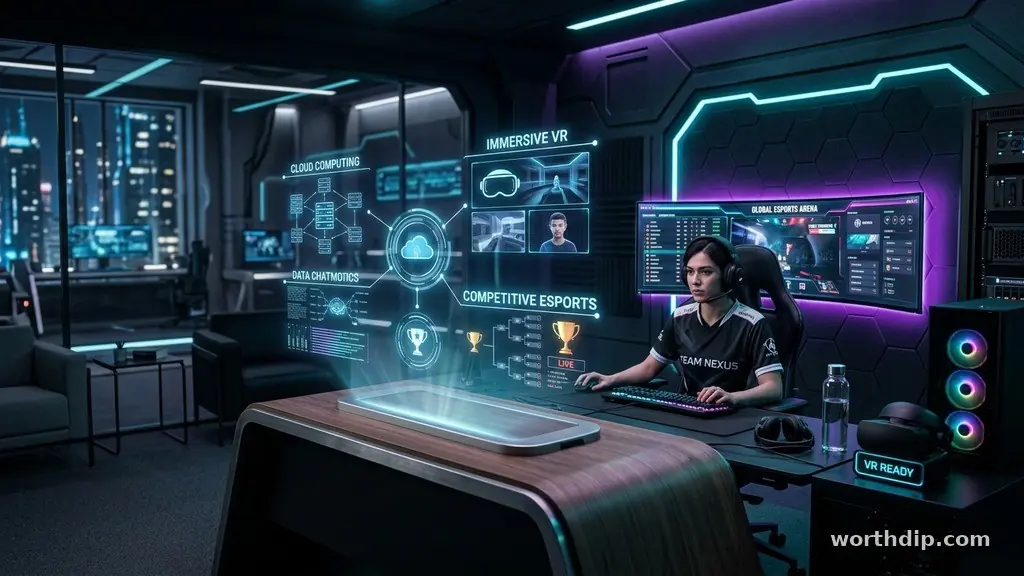
Staying ahead of Tgarchirvetech Gaming Trends: What Gamers Should Know requires a keen eye for how hardware, software, and connectivity intersect to shape the modern digital experience. As the industry shifts toward more immersive and accessible platforms, understanding these movements helps players make smarter decisions about their equipment and time.
Whether you are a casual enthusiast or a competitive professional, tracking these developments ensures your setup remains relevant in an increasingly fast-paced environment. This overview provides the essential insights needed to navigate the current landscape of gaming technology and anticipate what is coming next for your favorite virtual worlds.
The Core Pillars of Modern Gaming
At the heart of the current shift in the industry, we see a focus on performance, accessibility, and connectivity. These three pillars define how developers build new software and how hardware manufacturers iterate on their designs. Most gamers today prioritize a setup that balances visual fidelity with high frame rates, moving away from the “resolution at any cost” mindset of previous generations.
Infrastructure upgrades, particularly the rollout of high-speed fiber internet and 5G networks, have fundamentally changed the way we interact with digital content. Cloud gaming has moved from a niche experiment into a viable alternative for players who lack high-end hardware. By offloading the heavy lifting of processing to remote server farms, platforms allow users to stream high-fidelity experiences directly to tablets, laptops, or smart TVs.
This shift signifies a transition toward platform-agnostic gaming where the device matters less than the account ecosystem. Players no longer feel tethered to a single console or a bulky desktop tower to access their favorite titles. Instead, the focus has shifted toward persistent cross-platform progression and shared social spaces.
Advancements in Gaming Hardware
Hardware evolution currently revolves around efficiency and specialized processing power. Manufacturers are moving beyond simple clock speeds, focusing instead on dedicated AI cores and ray-tracing acceleration. These advancements allow for more realistic lighting and physics without the massive power draw that characterized hardware from a decade ago.
The integration of custom silicon in consoles has brought PC-level performance to living rooms, narrowing the gap between different tiers of equipment. We are also seeing a resurgence in modularity, where players can swap out components or peripherals to suit specific genres. This level of customization allows for a more personalized experience, whether you are building a flight simulator cockpit or a minimalist streaming station.
Key Hardware Milestones
* Ray-Tracing Integration: Real-time light simulation is now standard in most mid-to-high-tier graphics hardware.
* NVMe Storage Speeds: The transition from mechanical drives to high-speed solid-state storage has effectively eliminated loading screens in modern titles.
* Variable Refresh Rates: Adaptive sync technology ensures that displays match the frame output of the GPU to prevent screen tearing.
The Rise of Virtual Reality and Extended Realities
Virtual reality has transitioned from a tethered, restrictive experience to a more fluid and wireless one. Modern headsets now feature inside-out tracking, removing the need for external sensors and complex room setups. This reduction in technical barriers has allowed VR to find a more permanent place in the average gamer’s routine.
Beyond pure virtual reality, mixed reality is gaining traction as a way to blend digital overlays with physical surroundings. This technology offers potential for productivity and immersive gaming that doesn’t necessarily wall the player off from their environment. Developers are experimenting with haptic feedback suits and gloves to further bridge the gap between digital sensations and physical touch.
While the adoption rate remains steady rather than explosive, the quality of content has improved significantly. Titles are now designed with long-term playability in mind, rather than serving as short tech demos. This maturity in game design suggests that extended reality is shifting toward becoming a standard pillar of the interactive entertainment industry.
Cloud Gaming and Infrastructure Demands
Cloud gaming represents one of the most significant shifts in how software is delivered to consumers. By utilizing massive data centers, companies can offer high-end gaming experiences to devices that would otherwise be unable to run them. This model relies heavily on low-latency infrastructure, making local network optimization a critical skill for modern players.
To get the most out of these services, gamers are increasingly investing in mesh Wi-Fi systems and ethernet-backhauled setups. Reducing “jitter” and packet loss has become as important as raw download speed for maintaining a stable stream. As more providers enter the space, the competition is driving down the cost of entry for cloud-based subscriptions.
Comparison of Gaming Delivery Methods
| Method | Hardware Requirement | Latency Profile | Upfront Cost |
|---|---|---|---|
| Local PC/Console | High | Ultra-low | High |
| Cloud Streaming | Low | Variable/Medium | Low (Subscription) |
| Mobile Gaming | Minimal | Low (on 5G) | Very Low |
Prioritizing Health and Ergonomics
As gaming sessions grow in duration, players are paying more attention to their physical well-being. The “20/20/20” rule—looking at something 20 feet away for 20 seconds every 20 minutes—has become a standard recommendation for preventing digital eye strain. This focus on ergonomics extends to chair design, desk height, and even lighting setups that reduce glare.
Companies are responding by creating “active” furniture, such as standing desks that accommodate both work and play. Proper wrist support and mouse ergonomics are also being emphasized to prevent long-term repetitive strain injuries. This cultural shift reflects a more professional approach to the hobby, where physical health is seen as a way to extend one’s longevity as a player.
You can learn more about managing screen time and health via the American Academy of Ophthalmology guidelines on digital device usage. Implementing these small adjustments can significantly improve your comfort during marathon sessions. It is no longer just about the gear; it is about how the gear supports the human body.
The Role of AI in Game Development
Artificial intelligence is currently reshaping how developers create worlds and manage game balance. Procedural generation has reached a point where entire ecosystems can be simulated with minimal human intervention. This allows for massive, sprawling maps that feel alive and reactive to the player’s choices.
AI is also being used to improve non-player character behavior, making interactions feel less scripted and more organic. In competitive titles, machine learning algorithms are increasingly used to detect cheating or toxic behavior in real-time. This creates a safer and more balanced environment for the community to thrive in.
The potential for AI to optimize game performance on the fly is also expanding. Modern upscaling technologies use neural networks to render games at lower resolutions and reconstruct them at higher ones, providing a significant boost to frame rates without sacrificing visual quality. This is a massive win for users with older hardware.
Community and Social Connectivity
The social aspect of gaming has become as important as the mechanics themselves. Persistent, shared worlds have turned games into digital meeting places where players hang out, attend virtual concerts, and build relationships. This trend emphasizes the importance of community management and social tools within the software.
Cross-play and cross-progression are now industry standards, breaking down the silos that once separated players on different platforms. This connectivity allows friends to play together regardless of whether they are on a PC, console, or mobile device. As these barriers continue to fall, the focus shifts toward platforms that prioritize social integration and ease of communication.
Voice chat quality, social hubs, and integrated streaming tools are now essential features for any successful title. Developers are investing heavily in “social-first” design, ensuring that games remain engaging even when the player isn’t actively completing a mission. This evolution reflects the transition of games from simple pastimes into comprehensive social platforms.
Practical Tips for Future-Proofing Your Setup
Future-proofing your gaming setup doesn’t necessarily mean buying the most expensive hardware available. Instead, it is about investing in components that offer the best long-term value and flexibility. Prioritizing high-quality displays, reliable networking gear, and ergonomic furniture provides a foundation that will last through several hardware cycles.
Think carefully about your specific needs rather than chasing the latest marketing hype. If you play mostly competitive shooters, a high-refresh-rate monitor should be your priority. If you prefer immersive single-player adventures, investing in a high-quality sound system or a larger, color-accurate screen will provide more value.
Always keep an eye on software updates and driver optimizations, which can often extend the life of your existing hardware by months or years. Regularly cleaning your equipment and ensuring proper ventilation are also simple, effective ways to maintain performance. By taking a proactive approach, you ensure your setup remains an asset rather than a source of frustration.
Frequently Asked Questions
What is the most significant trend in gaming today?
The most significant trend is the shift toward cross-platform accessibility and cloud-based delivery, which allows players to access high-quality experiences on a wider range of devices than ever before.
How can I reduce eye strain while gaming?
Following the 20/20/20 rule is highly effective, alongside ensuring your monitor is at eye level and using bias lighting behind your screen to reduce the contrast between the display and the dark room.
Is cloud gaming a viable replacement for a console?
For many casual or mid-tier players, cloud gaming is a highly viable alternative, though competitive gamers may still prefer local hardware to minimize input latency and ensure the highest possible responsiveness.
What role does AI play in my gaming experience?
AI is currently used for real-time performance upscaling, procedural world generation, and improved anti-cheat detection, all of which contribute to a smoother and fairer gaming environment.
Do I need to upgrade my hardware every year?
You do not need to upgrade annually; most modern hardware is designed to remain relevant for three to five years, and performance gains are often more noticeable when waiting for significant architectural jumps.
Navigating the Future of Gaming
Understanding Tgarchirvetech Gaming Trends: What Gamers Should Know is about more than just keeping up with the latest specs; it is about recognizing how these shifts impact your personal experience. By focusing on sustainable hardware choices, prioritizing your physical health, and staying informed about new technologies like cloud streaming and AI, you can ensure that your gaming setup remains a source of enjoyment for years to come. The industry is moving toward a more inclusive and flexible future, and being aware of these developments allows you to participate on your own terms.
Take the time to audit your current setup and identify where small, intentional changes can yield the biggest improvements in your daily play. Stay curious, keep your gear maintained, and continue exploring the evolving digital landscapes that define modern entertainment.