
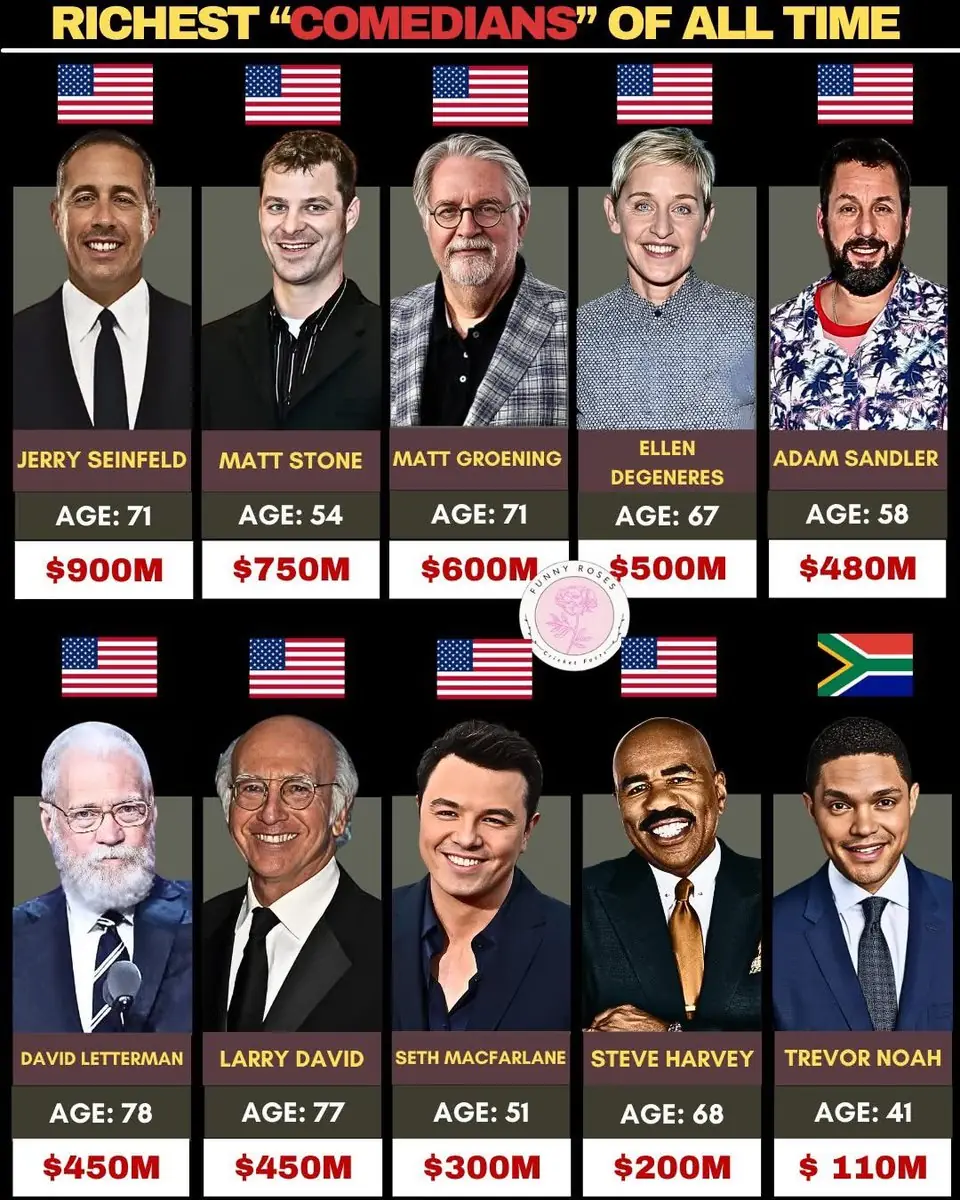
Understanding the financial heights reached by the world’s most successful performers reveals a fascinating intersection of artistry and business. While many fans appreciate the wit of a stand-up comedian on stage, few grasp the sheer scale of the empires built behind the scenes. From massive global tours to lucrative production deals, these performers have transformed laughter into substantial assets.
This overview of the richest comedians explores how these icons built their wealth, the sources of their income, and the figures that place them at the top of the entertainment industry. You will gain insight into the diverse strategies that define the upper echelon of modern comedy.
The Current Landscape of Top-Earning Comedians
When looking at the figures surrounding the richest comedians, Jerry Seinfeld and Kevin Hart often sit at the very top of the list. Jerry Seinfeld, for instance, has leveraged the enduring syndication of his eponymous sitcom to maintain a massive net worth, often estimated in the range of nearly $1 billion.
His ability to continue selling out arenas for his stand-up tours decades after his show ended proves the long-term value of a strong personal brand. Kevin Hart has taken a different approach, diversifying his income through streaming deals, production ventures, and high-profile brand partnerships.
These individuals demonstrate that comedy is no longer just about the ticket sales for a single night of performances. Instead, it is a multi-faceted business model that includes acting, writing, producing, and tech-enabled distribution.
Many of these stars own their master recordings or production companies, allowing them to capture a larger share of the profits. This shift from simple performer to media mogul is the primary engine driving the wealth of the highest-paid stars.
Jerry Seinfeld and the Economics of Syndication
Jerry Seinfeld represents the gold standard for long-term financial success in the industry. The primary driver of his wealth is not merely his stand-up career, although that remains highly lucrative, but the unprecedented success of his television series.
When the show entered syndication, it became one of the most profitable assets in television history. By retaining a stake in the show’s ownership, he ensured that every time an episode aired, he earned a significant royalty.
His approach to business is characterized by extreme selectivity and a focus on high-margin projects. He does not take every role offered to him, preferring instead to focus on content that maintains his specific brand identity.
This disciplined approach has allowed him to sustain his status as one of the richest comedians for over twenty years. He serves as a blueprint for how a comedian actor can transition into a long-term wealth builder through smart equity stakes.
Kevin Hart and the Power of Diversification
Kevin Hart has built his fortune by treating his career as a comprehensive media company. He launched his own production house, HartBeat, which develops content across film, television, and digital platforms.
This move allowed him to move beyond just being the talent and become an owner of the intellectual property. By controlling his own production pipeline, he creates multiple revenue streams simultaneously.
He is also a master of digital marketing, often leveraging his massive social media following to promote his projects directly to his audience. This bypasses the need for massive traditional advertising budgets, increasing the net profit of his films and specials.
His portfolio includes investments in tech companies and fitness brands, showing that he does not rely solely on the volatility of the entertainment industry. He is a prime example of a modern performer who balances a high-profile public persona with a quiet, aggressive business strategy.
The Role of Production and Writing
Many of the wealthiest stars in the industry are not just performers; they are also a writer producer who controls the creative output of their work. Trey Parker and Matt Stone, the creators of South Park, exemplify this model perfectly.
By creating a show that is both culturally relevant and highly adaptable, they have built a brand that has spanned decades. They own the rights to their work, which has allowed them to command massive fees from streaming platforms looking for evergreen content.
This control over intellectual property is the single most important factor for those reaching the billion-dollar threshold. When a comedian owns their own content, they do not just earn a paycheck; they build an asset that appreciates over time.
This is why the list of top earners is increasingly dominated by those who create their own shows or films. They are essentially building small studios that can scale as the demand for content grows.
Income Sources for Top Comedians
The financial success of these individuals comes from a variety of distinct channels. While live performance is the most visible, it is often not the most profitable relative to the effort required. The following list highlights the primary ways these stars build their fortunes:
- Touring and Live Shows: Selling out global arena tours remains a primary source of high-volume cash flow.
- Syndication Royalties: Long-running television series provide a consistent, passive income stream that lasts for decades.
- Production Companies: Owning the studio that produces your content allows for a greater share of ownership and backend points.
- Brand Endorsements: High-profile partnerships with global companies provide significant upfront fees.
- Streaming Deals: Exclusive multi-special agreements with platforms like Netflix or Amazon offer massive, guaranteed payouts.
- Equity Investments: Many comedians diversify by investing in startups, real estate, or venture capital funds.
Comparison of Wealth Sources
To understand the scale of these earnings, it is helpful to look at how different revenue streams contribute to overall wealth. The table below illustrates the relative impact of various income sources for a top-tier performer.
| Revenue Source | Profit Potential | Scalability |
|---|---|---|
| Stand-up Touring | High | Medium |
| TV Show Syndication | Very High | High |
| Film Production | Medium | High |
| Brand Partnerships | High | Low |
| Streaming Specials | High | Medium |
The Impact of Global Streaming Platforms
The rise of streaming platforms has fundamentally changed the economics of the comedy world. In the past, a comedian had to rely on television networks or film studios to reach a mass audience.
Today, a stand-up comedian can sign a global deal with a streaming giant that provides instant access to millions of viewers worldwide. This has led to an explosion in the value of comedy specials.
These platforms are in a constant bidding war for high-quality, exclusive content. This competition has driven up the price of stand-up specials to record levels.
For the biggest names, a single special can now command a paycheck in the tens of millions. This influx of capital has accelerated the wealth accumulation for the top tier of the industry, making it easier for them to transition into other ventures.
FAQs About Comedian Wealth
Who is considered the richest comedian in the world?
Jerry Seinfeld is widely cited as the wealthiest, with a net worth often estimated near $1 billion. His wealth is primarily attributed to the massive, long-term success of the show “Seinfeld” and its syndication deals.
Do stand-up comedians make most of their money from touring?
While touring is highly lucrative, the wealthiest comedians usually make their money from a mix of sources. Intellectual property ownership, such as producing their own television shows or movies, is typically the largest contributor to their total net worth.
What is the role of a writer producer in comedy wealth?
A writer producer creates the content they perform in, which gives them ownership of the intellectual property. This allows them to retain rights and royalties rather than just receiving a salary as an actor, which is the key to long-term wealth building.
How do streaming services affect comedian income?
Streaming services like Netflix have created a competitive market for exclusive content, driving up the prices for comedy specials. These platforms provide a global reach that was previously impossible, allowing comedians to monetize their work across many countries simultaneously.
Are there any billionaires in the comedy world?
While several individuals are close, most estimates for the wealthiest figures in comedy place them just under the $1 billion mark. However, when accounting for the total value of production companies and back-end rights, some figures are periodically estimated to have reached or exceeded that level.
Building a Sustainable Career in Comedy
Achieving financial success in the comedy industry requires more than just being funny; it requires a deep understanding of business and asset management. The most successful performers treat their careers as a permanent enterprise.
They reinvest their earnings into their own production companies and focus on creating intellectual property that they own outright. This is the difference between a high-earning performer and a true industry mogul.
For those interested in the business side of the arts, you can learn more about the complexities of media law and intellectual property rights through resources like the U.S. Copyright Office.
Understanding these legal frameworks is essential for anyone looking to build a lasting brand in the entertainment space. By focusing on ownership and strategic diversification, the next generation of comedians can emulate the success of the current icons.
The journey to becoming one of the richest comedians is a marathon, not a sprint. It involves years of building a fan base, refining a craft, and eventually leveraging that popularity into business opportunities. While the numbers can be staggering, they are the result of decades of work and calculated risks.
Whether you are a fan of classic stand-up or modern multimedia comedy, the financial success of these individuals is a testament to the power of creative entrepreneurship. As the industry continues to evolve with new technology, the ways in which these stars generate wealth will likely change, but the core principles of ownership and diversification will remain the same.