
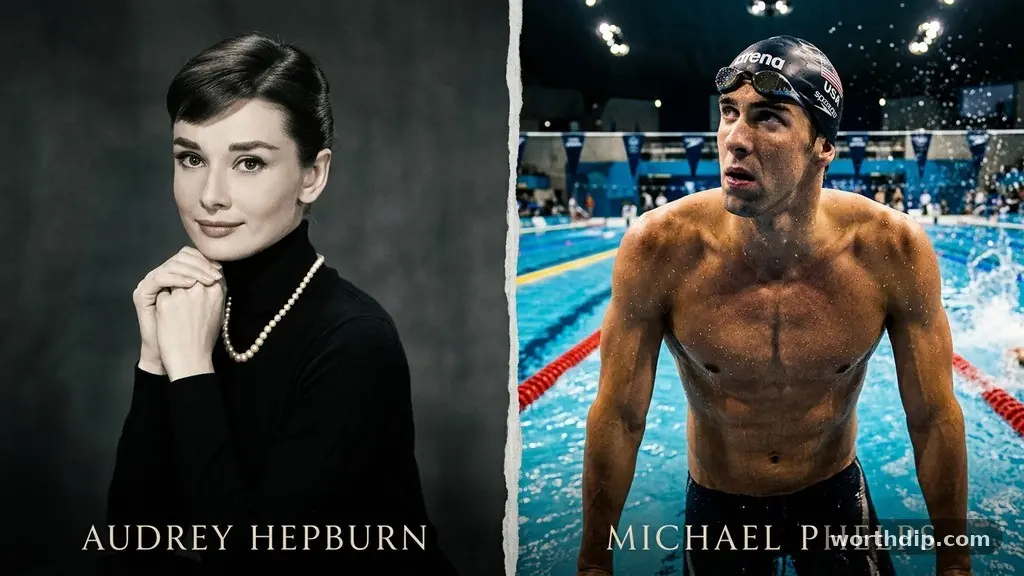
Comparing Audrey Hepburn and Michael Phelps might seem unusual at first glance. One reigned over Hollywood cinema and humanitarian fields, while the other dominated the swimming pool to win unprecedented Olympic medals.
Yet exploring the stories of Audrey Hepburn and Michael Phelps reveals surprising parallels in their dedication, global impact, and enduring legacies. This brief biographical look examines what happens when two titans from completely different arenas share a single lens, offering a fresh perspective on what true greatness requires.
What Do Audrey Hepburn and Michael Phelps Actually Have in Common?
At first glance, a silver-screen legend and a competitive swimmer appear to share very little common ground. However, both Audrey Hepburn and Michael Phelps achieved the absolute pinnacle of global recognition in their respective fields.
They each experienced intense public pressure, grueling preparation regimens, and a level of fame that changed their lives permanently. Their dedication went far beyond natural talent, relying instead on relentless focus and immense personal sacrifice.
Both figures also transformed their personal struggles into powerful platforms for advocacy. While Audrey Hepburn devoted her later years to humanitarian causes, Michael Phelps became a vocal champion for psychological well-being.
They prove that lasting influence stems not just from professional triumphs, but from how a person uses their platform to help others. Their shared commitment to causes greater than themselves unites their stories across different eras.
Audrey Hepburn: Early Life and Background
Born in Brussels in 1929, Audrey Hepburn spent her formative years navigating the devastating realities of World War II. Her experiences in the Netherlands, including severe malnutrition and witnessing the horrors of conflict, shaped her compassionate worldview.
These difficult years left physical vulnerabilities that stayed with her throughout her life, yet they also forged a remarkable inner strength. She studied ballet in Amsterdam and London before shifting her focus toward acting and modeling.
Her breakthrough arrived on the Broadway stage in the title role of Gigi in 1951, which caught the attention of Hollywood casting directors. Stardom followed swiftly with her iconic performance in Roman Holiday, a role that earned her an Academy Award at just 24 years old.
Throughout her career, she maintained a distinct elegance that separated her from contemporaries, charming audiences in classics like Breakfast at Tiffany’s and My Fair Lady. Her style remains a timeless standard in the fashion world today.
Michael Phelps: Early Life and Background
Born in Baltimore, Maryland in 1985, Michael Phelps began swimming at the age of seven partly to channel his boundless energy. Diagnosed with attention deficit hyperactivity disorder, he found that the structure and discipline of the pool provided a vital outlet.
Under the guidance of coach Bob Bowman, his natural aquatic talents quickly blossomed into elite competitive ability. By age fifteen, he qualified for the 2000 Sydney Olympics as the youngest male American swimmer in nearly seven decades.
That early Olympic appearance served as a mere stepping stone for unprecedented athletic dominance. At the 2004 Athens Games, he captured six gold medals and two bronze medals, announcing his arrival on the world stage.
He followed this with his historic eight-gold-medal sweep at the Beijing Olympics in 2008, shattering Mark Spitz’s long-standing record. His extraordinary physical attributes, combined with a relentless work ethic, redefined the boundaries of competitive swimming.
The Humanitarian Chapter
After stepping away from full-time acting, Audrey Hepburn dedicated the remainder of her life entirely to charitable endeavors. As a Goodwill Ambassador for UNICEF, she traveled to some of the poorest regions in Africa, Asia, and Latin America.
She witnessed firsthand the devastation of famine, war, and preventable disease, using her celebrity status to draw global attention to suffering children. Her tireless advocacy earned her the Presidential Medal of Freedom in 1992, recognizing her profound impact on international humanitarian efforts.
* Appointed as a UNICEF Goodwill Ambassador in 1988
* Participated in field missions to Ethiopia, Sudan, and Bangladesh
* Advocated for immunization and nutrition programs worldwide
* Received the Jean Hersholt Humanitarian Award posthumously in 1993
* Established the Audrey Hepburn Children’s Fund to continue her mission
Mental Health Advocacy and Later Life
While Michael Phelps achieved unparalleled athletic success, winning a staggering 28 Olympic medals, his internal struggles remained largely hidden from the public. After the 2012 London Olympics, he experienced a severe bout of depression that prompted him to seek professional help.
He subsequently transformed his personal vulnerability into a powerful public mission, speaking openly about psychological challenges. By sharing his own journey, he helped dismantle long-standing stigmas surrounding therapy and emotional wellness.
| Athlete / Icon | Primary Field | Major Achievements | Key Post-Career Focus |
|---|---|---|---|
| Audrey Hepburn | Film / Humanitarian | Academy Award, 28-year film career | Global UNICEF Goodwill Ambassador |
| Michael Phelps | Competitive Swimming | 23 Olympic Gold Medals, 28 total | Mental Health Advocacy |
Assessing the Cultural Legacy
The cultural footprints left by Audrey Hepburn and Michael Phelps extend far beyond their initial domains. Hepburn remains a global symbol of classic beauty, grace, and philanthropic dedication.
Phelps altered how the world views athletic longevity and the hidden pressures placed on elite competitors. Both individuals demonstrated that public adoration carries a responsibility to effect meaningful change in society.
Their stories also highlight the importance of resilience in the face of adversity. Whether enduring the trauma of wartime occupation or navigating the crushing weight of public expectations, both figures rose above their circumstances.
They proved that true iconic status is forged during moments of crisis rather than periods of ease. Their enduring popularity across generations speaks to the universal appeal of their character.
Frequently Asked Questions
What did Audrey Hepburn and Michael Phelps have in common?
Despite working in completely different fields, both achieved historic global fame and used their platforms to champion charitable or wellness causes. They both faced immense public pressure and demonstrated extraordinary dedication to their respective crafts.
How many Olympic medals did Michael Phelps win?
Michael Phelps won a total of 28 Olympic medals across multiple Olympic Games, including 23 gold medals. This remarkable tally makes him the most decorated Olympian in history.
Why did Audrey Hepburn stop acting?
Audrey Hepburn gradually stepped away from full-time filmmaking to focus on raising her children and dedicating her time to international humanitarian work through UNICEF. She found deeper personal fulfillment in advocating for vulnerable children around the world.
How did Michael Phelps change the conversation around mental health?
By publicly discussing his own battles with depression and anxiety, Michael Phelps helped normalize the conversation around psychological wellness for elite athletes and the general public alike. He established a foundation dedicated to promoting physical and mental health.
Conclusion
Examining Audrey Hepburn and Michael Phelps side by side offers a unique perspective on what it means to achieve greatness and sustain it under intense public scrutiny. From silver screens to Olympic pools, these two figures redefined the boundaries of their professions while leaving a legacy defined just as much by their compassion as their achievements. Exploring their journeys reminds us that true impact often comes from how we choose to support others once our own battles are won.