
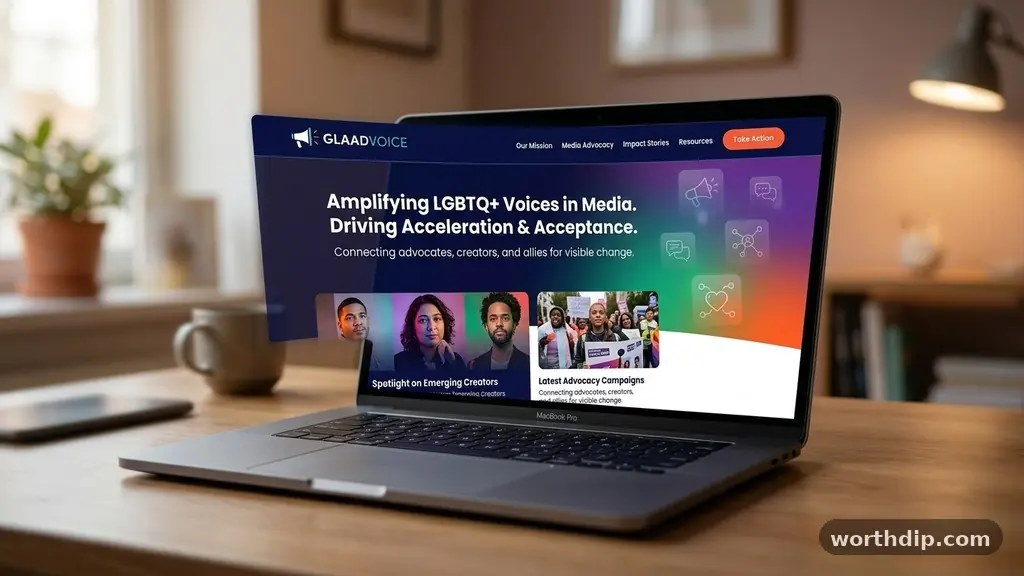
Glaadvoice.com functions as a digital platform that aggregates information across several broad categories, ranging from general news to specific health and advocacy topics. Understanding the nature of the content found on Glaadvoice.com requires looking at how the site positions itself within the crowded landscape of online media. Many visitors arrive at the domain wondering if it carries an official link to established advocacy groups or if it serves as an independent source of information.
By exploring the site’s structure and the nature of its articles, you can better determine how to interpret the material presented there. This guide provides clarity on the platform’s focus, its operational identity, and the practical steps you should take when evaluating its content.
The Identity of Glaadvoice.com
At its core, the site presents itself as a hub for articles covering a diverse array of subjects. Unlike niche blogs that focus on a single industry, this platform spans topics that include lifestyle, medical advice, and general news updates. The name itself often leads users to assume a formal connection to the well-known media monitoring organization, GLAAD org, which is a major advocate for LGBTQ representation in media.
However, there is no evidence that the site is an official outlet for that organization. It operates as a separate entity, utilizing a name that mirrors the sound of a prominent advocacy group without sharing its institutional mission or governance.
For readers, this distinction is critical. You should approach the information on the site as independent commentary rather than official policy positions from a national advocacy nonprofit.
Distinguishing Independent Sites from Official Organizations
When you visit a web domain, checking the About page and the site’s stated mission is a standard practice for verifying credibility. Official organizations usually maintain a clear, transparent history of their founding, their board members, and their specific goals. They typically provide high-level reporting on their activities and direct links to their verified social media presence.
In contrast, sites like Glaadvoice.com often focus on generating traffic through a wide variety of searchable topics. They may use headlines that appear timely or relevant to current events to draw in casual readers.
If a site lacks a clear editorial board or transparent authorship for its articles, you should treat the content with a higher degree of skepticism. Always look for citations or links to primary sources to confirm the claims made in any piece of text.
Common Themes and Content Categories
The content on the site is broad, which is a common trait for platforms designed to capture search engine traffic across multiple niches. You will frequently find articles categorized under health, lifestyle, and general news. These pieces are often written in a style intended to be accessible to a wide audience.
Health and Medical Articles
The health section on the site often covers general wellness tips, common medical queries, or summaries of lifestyle trends. It is important to remember that general news sites are not substitutes for professional medical advice. If you are reading about a specific condition or treatment, always verify that information through a licensed health provider. Never rely on a third-party website for diagnostic information or critical health decisions.
News and Advocacy Topics
The site occasionally touches upon themes related to social advocacy or media representation. While these articles might mirror the language used by established activists, they rarely provide the depth of analysis you would find in an official report. They are designed to be general summaries rather than investigative journalism or deep-dive academic research.
Evaluating Website Safety and Reliability
When exploring any site that covers medical or social advocacy topics, safety is a primary concern. You should consider whether the site features intrusive advertising, suspicious pop-ups, or redirects to questionable third-party domains. These are often signs that a site prioritizes ad revenue over user experience or information security.
If you find that your browser blocks access to the site or warns you about potential security risks, heed those warnings. Modern browsers are quite effective at identifying domains that host malicious scripts or phishing attempts. A trustworthy site will generally have a clean, stable interface that does not attempt to force you into clicking on unrelated links or downloading unknown files.
Comparison of Information Sources
It is helpful to compare how different types of websites handle information regarding advocacy and social issues. This table highlights the differences between an independent aggregator and an official organizational source.
| Feature | Independent Aggregator | Official Organization |
|---|---|---|
| Editorial Board | Usually not public | Clearly listed and verified |
| Primary Source Links | Often missing or sparse | Extensive and peer-reviewed |
| Mission Statement | Vague or profit-focused | Specific and advocacy-driven |
| Content Accuracy | Subject to individual error | Vetted by experts/staff |
What Readers Should Know Before Sharing
Before you share an article from a site like this, consider the source’s authority. Sharing misinformation, even unintentionally, can contribute to the spread of inaccurate data. If you come across an article that makes bold claims about health or social policy, take a moment to perform a quick search for the topic on more established, reputable news outlets or academic journals.
If you cannot find the same information reported by a credible source, it is safer to assume the information might be exaggerated or entirely fabricated. Advocacy-related content is particularly sensitive, as it often touches on the lives and rights of real people. Accuracy and empathy should always be the guiding principles when you circulate information online.
Common Questions About the Platform
Is Glaadvoice.com owned by the official organization GLAAD?
No, there is no public record or verifiable evidence to suggest that the site is owned, operated, or endorsed by the official GLAAD organization. The similarity in the naming convention appears to be a stylistic choice rather than an indication of institutional affiliation.
Is it safe to visit the site?
While the site itself may not always be inherently malicious, it is wise to maintain standard internet safety practices. Use an ad-blocker, keep your browser updated, and avoid clicking on suspicious advertisements that may appear as you read through their articles.
Does the site provide accurate medical advice?
The articles found on the site should not be treated as professional medical advice. They are general in nature and likely written for an audience interested in broad, non-specialized content. Always consult a doctor or certified healthcare professional for medical concerns.
What kind of articles does the site publish?
The site publishes a mix of general news, lifestyle tips, and articles related to social advocacy. These topics are chosen to appeal to a wide range of interests, often focusing on current trends to drive traffic to the domain.
How can I verify information found on such sites?
You can verify information by checking if major, reputable news organizations are reporting the same story. Look for primary sources, such as government reports or official statements from established organizations, rather than relying on a single third-party blog.
The Value of Critical Media Literacy
Developing a habit of questioning the sources you consume is one of the most valuable skills in the digital age. When you encounter a site like Glaadvoice.com, treat it as a starting point for inquiry rather than the final word on any subject. If an article sparks your interest, use it as a prompt to conduct your own research.
* Check the author’s credentials or bio.
* Look for an “About Us” page that explains the site’s funding and purpose.
* Verify the date of the article to ensure the information is still current.
* Search for the headline on a fact-checking website if the claim seems unusual.
* Observe whether the site relies on emotional language rather than data-driven evidence.
By following these steps, you protect yourself from misinformation and become a more informed reader. The internet is full of voices, but not all of them offer the same level of reliability. Your ability to discern between a professional, vetted publication and an independent aggregator is your best tool for navigating the modern media landscape.
Concluding Thoughts on Digital Media Consumption
Engaging with online content requires a balance of curiosity and skepticism. While sites like Glaadvoice.com might provide interesting snippets of news or lifestyle content, they do not carry the same weight as established media institutions or official advocacy groups. By understanding the distinction between independent aggregators and reputable sources, you ensure that the information you absorb is accurate and reliable.
As you continue to explore the digital world, keep your focus on high-quality, transparent reporting. Use the tips provided in this guide to assess the credibility of any site you visit.
By choosing to prioritize accuracy, you contribute to a more informed and reliable online community. If you have questions about a specific topic, always seek out the most direct, authoritative sources available to satisfy your curiosity and build your knowledge base.