
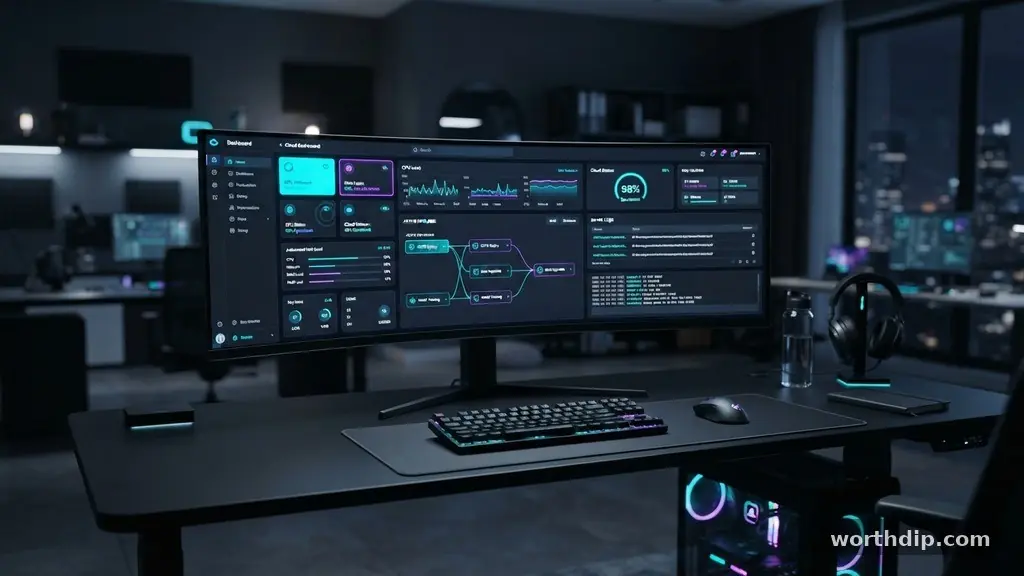
Finding a reliable way to manage digital workflows often leads power users to the QuikConsole com review (2026) landscape. This platform serves as a centralized hub for individuals looking to bridge the gap between high-performance gaming hardware and professional-grade productivity tools. By integrating cloud-based dashboards with automated task management, the site aims to streamline how enthusiasts interact with their digital environments.
Whether you are tracking system telemetry or organizing complex project files, understanding the core utility of this domain is essential for optimizing your daily output. This analysis breaks down the actual performance, features, and user experience you can expect from the platform this year.
Core Functionality and User Experience
The primary purpose of the platform is to consolidate disparate software tools into a single, cohesive dashboard. Users often find themselves juggling multiple applications for hardware monitoring, project management, and cloud storage. This site attempts to solve that fragmentation by providing a unified interface that pulls data from various sources.
The user interface relies on a modular grid system that allows for high levels of customization. You can drag and drop widgets to prioritize the information that matters most to your specific workflow. This level of flexibility is particularly helpful for gamers who need real-time hardware telemetry alongside their communication apps.
Navigation remains straightforward, even for those who are not technically inclined. The developers have focused on reducing latency between the cloud-based backend and the local display. As a result, the dashboard feels responsive, which is a significant improvement over earlier iterations of the service.
Gaming Optimization and Hardware Tracking
For those focused on gaming, the platform offers specific modules for tracking system health in real-time. It monitors CPU temperatures, GPU utilization, and memory usage without requiring heavy background processes. This ensures that your gaming experience remains fluid while you keep an eye on performance metrics.
The integration with common gaming hardware is quite broad. It supports most major manufacturers, allowing you to pull data directly from your components without needing a dozen different utility programs. This is a massive relief for anyone trying to keep their system tray clean.
Automated alerts are another standout feature for this demographic. If your hardware exceeds a predefined temperature threshold, the system can trigger a notification or even a scripted response. This proactive approach to hardware management helps prevent thermal throttling during intense gaming sessions.
Automation and Productivity Workflows
Productivity is where the platform truly distinguishes itself from standard monitoring tools. It allows users to build automation sequences that trigger based on specific events. For instance, you can set the system to launch your preferred work applications the moment your hardware reaches a stable, idle state.
This capability extends to file management and cloud synchronization. You can automate the process of backing up specific project folders to the cloud whenever you save a file. By reducing the number of manual steps required for routine tasks, users can focus more on their creative or technical work.
The script editor provided within the dashboard is surprisingly robust. While it offers pre-built templates for beginners, advanced users can write custom logic to handle complex tasks. This makes it a versatile tool for anyone from students to professional software developers.
Cloud Management and Data Integration
Operating as a cloud-native service, the platform ensures your configurations are accessible from any device. You can log in from a secondary laptop or a tablet and see the exact same dashboard layout you use on your primary workstation. This persistence is a major benefit for users who operate across multiple environments.
Data security is handled through standard encryption protocols, ensuring that your hardware information remains private. The platform maintains a clear separation between your public profile and your private system data. This gives peace of mind to users who are concerned about sharing their machine specs online.
Integrating with third-party cloud services is also a breeze. You can connect your Google Drive, Dropbox, or OneDrive accounts directly to the dashboard. This allows for a birds-eye view of your cloud storage usage alongside your system’s local performance statistics.
Comparing Performance and Versatility
When evaluating the platform against other industry standards, it is helpful to look at specific performance markers. The following table highlights how it stacks up against traditional standalone monitoring and productivity tools.
| Feature | Standalone Tools | QuikConsole Platform |
|---|---|---|
| Centralization | Low | High |
| Resource Footprint | High (multiple apps) | Low (single hub) |
| Automation Scope | Limited | Extensive |
| Cloud Sync | Rare | Native |
As shown in the table, the main advantage of this approach is the reduction in resource overhead. By running one integrated service instead of five separate ones, you free up system memory for actual gaming or productivity tasks. This is a critical factor for users with mid-range hardware.
Data Security and Privacy Standards
Privacy is a non-negotiable aspect of any cloud-based dashboard. The team behind the domain has implemented multi-factor authentication to protect user accounts from unauthorized access. This is a standard requirement for modern web services, and its presence here is reassuring.
All data transmitted between your local machine and the cloud platform is protected by TLS encryption. This prevents third parties from intercepting your system statistics or personal productivity data. You can read more about the importance of these security measures through the Cybersecurity and Infrastructure Security Agency official guidelines.
The site also provides a granular control panel for data sharing. You can choose which metrics are visible to the community and which remain strictly private. This transparency allows users to participate in the platform’s social features without compromising their personal security.
Key Considerations for New Users
Getting started with the platform involves a few simple steps. First, you need to create an account and install the lightweight local agent. This agent acts as the bridge between your hardware and the cloud interface.
Once installed, the setup wizard will scan your system for compatible components. It typically takes less than five minutes to get your initial dashboard up and running. From there, you can begin adding widgets and configuring your automation rules.
It is worth noting that the platform is constantly evolving. The developers frequently release updates that add support for new hardware and software integrations. Keeping your local agent updated is the best way to ensure you have access to the latest features.
- Create a free account on the main site to test the core features.
- Install the local agent to enable real-time telemetry.
- Customize your dashboard grid to prioritize high-priority tasks.
- Explore the automation library to find pre-built scripts for your workflow.
- Check the community forums for tips on optimizing your setup.
Frequently Asked Questions
Is the platform free to use?
The service operates on a freemium model. A significant portion of the dashboard and automation features are available at no cost, while advanced cloud storage and deep-level analytics are reserved for premium subscribers.
Does it work on macOS or Linux?
Currently, the primary agent is optimized for Windows environments. Support for other operating systems is on the developer roadmap, but it is not the primary focus for the 2026 version.
Can I share my dashboard with others?
Yes, the platform includes a sharing feature that allows you to export your layout or publish a read-only version of your dashboard. This is great for showing off your hardware benchmarks or sharing productivity workflows with team members.
How secure is my data?
Your data is encrypted both in transit and at rest. The platform does not store sensitive credentials for your third-party accounts, using secure tokens instead to manage integrations.
Can I use it without a cloud connection?
The dashboard relies on the cloud for real-time synchronization and remote access. While you can use some local features offline, the full benefit of the platform is realized when connected to the internet.
Final Thoughts on the Platform
The QuikConsole com review (2026) highlights a platform that has matured into a powerful tool for tech-savvy users. By focusing on the intersection of gaming performance and productivity, it solves a genuine problem for those who want to keep their digital life organized. The ability to automate mundane tasks while keeping a close eye on system health makes it a valuable addition to any workstation.
If you are looking to declutter your desktop and centralize your digital management, this service is worth a try. Start by setting up a basic dashboard and experimenting with the automation features to see how they fit your specific needs.
As the platform continues to grow, it will likely remain a key player in the space. Engage with the community, share your feedback, and enjoy a more streamlined approach to your daily computing.